


How Replacement Warranties Work in Digital Subscription Stores

How Replacement Warranties Work in Digital Subscription Stores
Digital goods feel instant until a login fails on day two. That is why replacement warranties matter in subscription stores. A clear warranty is not a loophole for abuse—it is a service promise: if delivery does not work as described within a stated window, the shop replaces it according to policy.
This article explains how healthy stores design those policies, what buyers should document, and how operators avoid both chargeback chaos and unfair denials. Brand-safe reminder: we are talking about legitimate digital subscription retail and reseller education, not piracy or cracked accounts.
What a Replacement Warranty Usually Covers
- Credentials that never work at first login
- Accounts that drop within a published guarantee window
- Wrong plan tier delivered versus what was sold
- Region mismatches clearly stated as covered in the listing
What it usually does not cover: buyer password changes that lock the shop out of support, sharing that violates the upstream service rules, or “I changed my mind” after weeks of use. Good stores put those exclusions in plain language next to the buy button.
Timelines and Proof
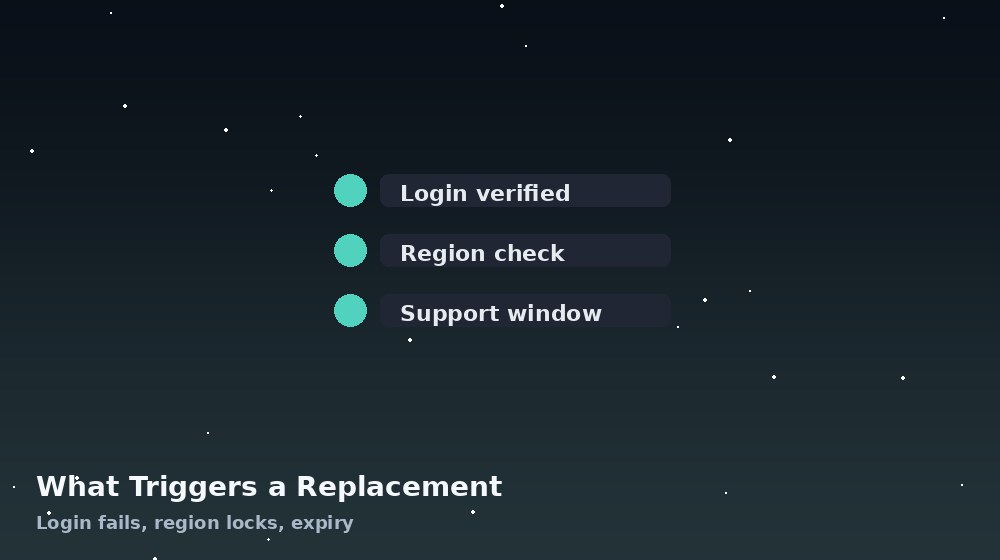
Warranties need clocks. Common patterns include replacement windows measured in days or weeks from delivery, plus a response-time target for support. Buyers should keep order IDs, screenshots of errors (without spreading passwords publicly), and the time they first tested the login.
- Test soon after delivery—waiting until day 29 on a 7-day window helps no one.
- Contact support through the official ticket path, not random DMs.
- Provide the order number and a clear error description.
- Do not reset credentials in ways that block verification if the policy asks you not to.
How Stores Operationalize Replacements
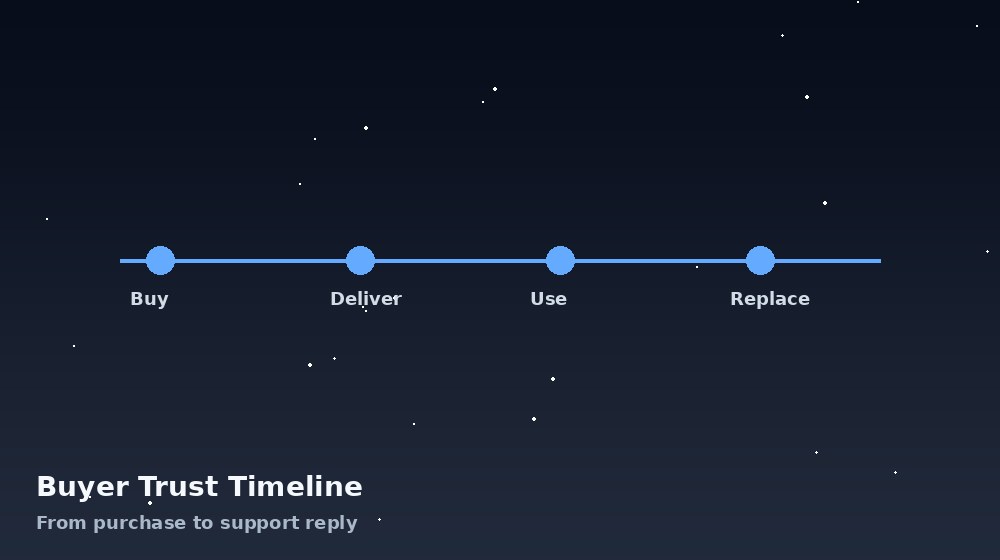
Behind the scenes, a replacement pool, inventory checks, and fraud filters keep the promise affordable. Automated delivery platforms can flag repeat claims from the same buyer fingerprint. Human review still matters for edge cases.
Operators should track replacement rate by SKU. A product with constant replacements is a supply problem, not a “support skill” problem. Pull it until quality stabilizes.
Trust Copy That Does Not Overpromise
Say what you mean: “Replace if undeliverable within X days” is better than “lifetime guarantee” theater. Lifetime claims on third-party subscriptions are a red flag for buyers and platforms alike. AccountBot-style storefronts earn trust with specific windows, visible support channels, and consistent follow-through.
Buyer Checklist Before You Purchase
- Find the warranty length on the product page.
- Confirm which failures are covered.
- Note the support email/ticket URL.
- Understand region and device limits for that subscription.
- Keep payment receipts until the window closes.
Operator Checklist Before You Publish a SKU
- Write exclusions a non-lawyer can understand.
- Train support on the same script the website shows.
- Budget replacement COGS into margins.
- Retire SKUs with unhealthy claim rates.
- Never instruct buyers to break upstream terms.
Fraud Patterns Stores Should Watch
Common abuse patterns include serial “never worked” claims after long silent use, demands for cash refunds outside policy, and credential sharing that breaks the product then blaming the shop. Train support to ask consistent verification questions. Consistency protects honest buyers as much as it blocks abuse.
Log outcomes: replaced, rejected with reason, or escalated. Review the log weekly. If rejections cluster on unclear copy, fix the website. If replacements cluster on one supplier, fix supply.
Communicating During an Incident
When a batch of deliveries fails, message buyers early with a status note and expected fix time. Silence creates chargebacks. A short, factual update—“we are reissuing affected orders within 24 hours”—keeps trust even when the day is ugly.
Never ask buyers to post passwords in public comments. Use ticket systems. Redact screenshots in internal chats if they contain secrets.
Warranty Language Samples (Adapt Carefully)
Useful structure: coverage window, covered failure types, response target, exclusions, and how to open a ticket. Avoid absolute forever promises on third-party subscriptions. Align storefront, FAQ, and support macros so nobody invents a policy on the fly at midnight.
Buyers comparing shops should prefer specific warranty math over mega-discounts with vague “guarantee” badges. Price and promise travel together.
Partial Failures and Goodwill Gestures
Sometimes a plan works but a single feature disappoints—missing 4K, slower activation, region nuance. Policies should state whether that is a replacement, a partial goodwill gesture, or outside coverage. Ambiguity here creates public reviews that ignore the rest of a good operation.
Document goodwill exceptions when you grant them so you do not invent uneven treatment. Fairness scales; random generosity does not.
Aligning Warranty With Supplier Terms
Your store warranty cannot honestly exceed what your upstream supply can support. If your supplier only replaces for seven days, advertising thirty without buffer stock is how shops implode. Either shorten the promise, raise price to fund a buffer, or change suppliers.
Monthly finance review should include warranty liability: open claims, average cost per claim, and claim rate by SKU. Treat it like inventory shrink in a physical store.
Public Reviews and Warranty Perception
Buyers often skim reviews for the words “replaced” and “ignored.” A shop that replaces quickly even when annoyed earns quieter one-star storms. Ask happy replacement customers for honest feedback after the fix—not for fake five-stars.
Internally, celebrate low claim rates more than clever denial rates. The goal is products that work, with warranty as a backstop.
Bottom line: replacement warranties in digital subscription stores are structured promises with clocks, proof, and exclusions. Buyers who test early and document calmly get faster help. Sellers who price warranties into margins and publish honest rules keep trust without inviting abuse.